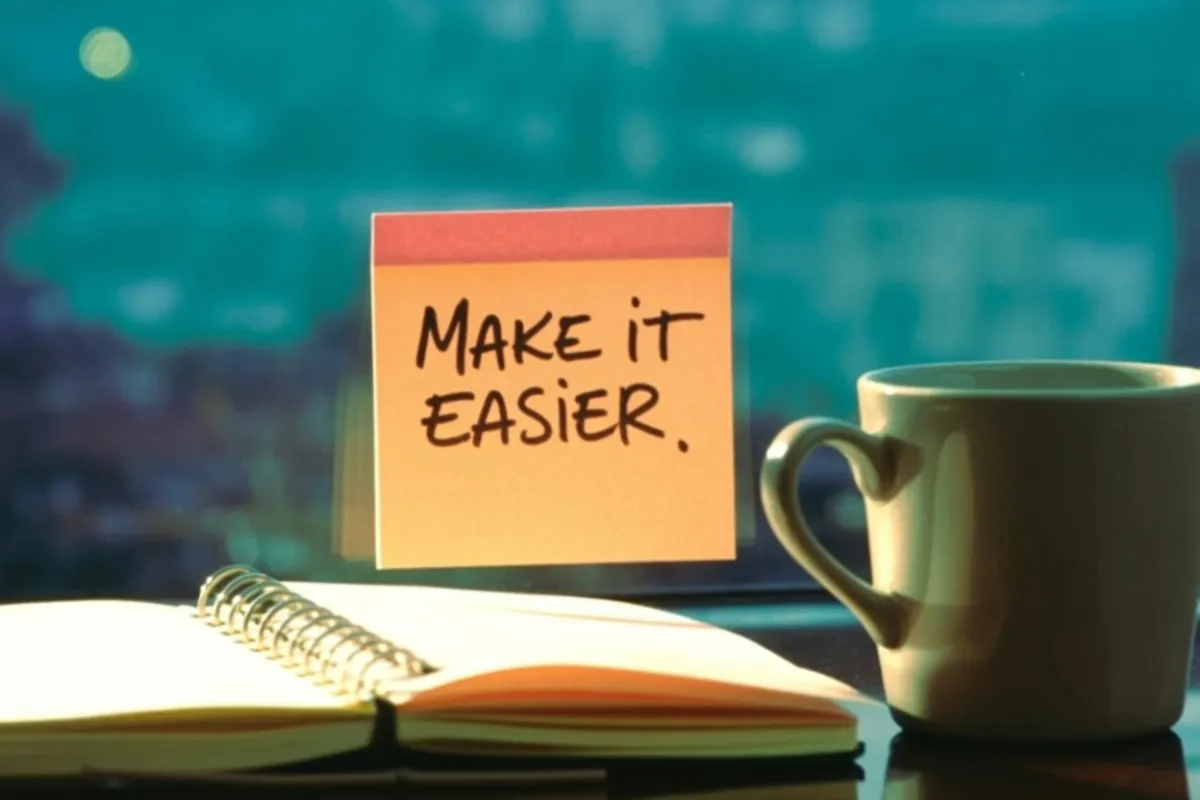
I’m Not Here to Make You an AI Expert. I’m Here to Make Your Work Easier.
If you’ve ever opened a new AI tool, stared at the screen, and felt your shoulders climb up toward your ears, I get it, y'all.
It can feel like there’s a hidden rulebook you missed. Like everyone else is fluent, fast, and fearless, and you’re sitting there thinking, “When did this become required?”
If that’s you, that feeling makes complete sense. You’re already carrying a real business, real clients, real creative work, and real life. Adding “learn AI” on top of all that can feel like one more weight you didn’t ask for.
So, let me say this: there’s no test you’re failing. You don’t have to be perfect. And, you don’t have to keep up.
Also, the pressure you're feeling isn't just you. In a Pew Research Center survey of U.S. workers, 33% said they feel overwhelmed about how AI may be used in the workplace. [1]
If people with teams and departments feel overwhelmed, it makes sense that it feels even heavier when you’re carrying everything solo.
And just so we’re clear, I’m not here to turn you into an AI expert.
I’m here to make your work easier.
And by “easier,” I mean this in a grounded, real-life way: fewer decisions. Fewer stuck moments. Less rework. More follow-through. Less mental clutter at the end of the day.

The “AI expert” myth is loud… and unnecessary
A lot of the messaging around AI quietly says: learn it, master it, stay current, or risk falling behind.
But, most solopreneurs don’t need another subject to major in. They need support in places where the work gets heavy.
Because, here’s the thing. The weight you’re feeling often isn’t from a lack of talent or discipline. It’s the sheer volume of little tasks that keep multiplying.
An article from Entrepreneur.com found entrepreneurs spend an average of 36% of their work week on administrative tasks like invoicing, data entry, and ordering supplies. [2]

That’s not a motivation problem. That’s a bandwidth problem.
Using AI well looks more like alignment than mastery
Using AI well isn’t about collecting tools or speaking in technical terms. It’s about choosing support that fits your real work.
“Simplicity is about subtracting the obvious, and adding the meaningful.” John Maeda (Laws of Simplicity)
That’s the heart of what we’re doing here. Not adding more tools or complications to your life that you don't need. But, subtracting what’s not serving you, and building support where it counts.
It can be simple:
Getting the first draft started so your brain isn’t doing the hardest part alone
Turning your scattered notes into a clear outline
Creating a repeatable way to respond to common client questions
Making space for your actual skill to shine by reducing the busywork around it
Competence doesn’t require obsession. Relief counts as a win.
So, here’s a quiet question to sit with: Where do you feel the most mental friction in your week?
That’s usually the place to start.
And, if AI isn’t the right fit for part of your work, that’s cool, too. Discernment is part of doing this well. The goal isn’t to use AI everywhere. It's feeling more supported where it actually helps.
This doesn’t have to be a solo project
This is where my approach is different.
We start with you, not the tools.

We look at your work, your values, your capacity, and the way you naturally think. Then, we decide what’s worth supporting with AI and what’s not.
And, here’s the key: I hold the complexity so you don’t have to.
I filter out the noise. I translate what matters. I help you choose a few things that actually fit. Then, we set systems and workflows up in a way that feels steady and usable.
You keep your agency. You stay in the driver’s seat. You just don’t have to carry every decision alone.
What we won’t do
It might help for me to say this plainly: if you want AI to outsource your voice, automate your relationships, or crank out content like a machine, I’m not your person.
I’m not interested in using AI to bulldoze what makes your work YOU. And, I’m not here to help you do more at any cost.
“In contrast, when AI is focused on augmenting humans rather than mimicking them, then humans retain the power to insist on a share of the value created.” Heather Stewart, "AI Must Augment Rather Than Replace Us or Human Workers Are Doomed" (The Guardian)
That’s where I draw the line and what I care about. Tech support that protects people, capacity, and dignity.
What it feels like to work with me
It feels like fewer tabs open in your brain.
It feels like someone taking the “shoulds” off your plate and replacing them with clear next steps.
It feels like fewer time leaks, too. In a Slack-commissioned 2024 survey of 2,000 U.S. small business owners, respondents reported losing an average of 96 minutes of productivity daily, which adds up to about three weeks per year. [3]

When you’re the strategist, the creator, the admin, and the customer support desk, that kind of loss isn’t just annoying. It’s freakin' exhausting!
And, this is where a simple principle helps keep you out of tool overload:
“The first principle is, clutter is costly.” - Cal Newport (Superhuman Blog)
We don’t add AI everywhere. We choose a small number of uses that genuinely support what you value, then we make them easier to repeat.
In Microsoft and LinkedIn’s 2024 Work Trend Index, “AI power users” reported AI makes their overwhelming workload more manageable (92%) and helps them focus on the most important work (93%). [4]
Not because they became technical geniuses, but because they built supportive habits and systems around the work.
A gentle place to start
If you want a low-pressure first step, try this:
Pick one repeatable task you do every week that drains you. The one that makes you sigh before you even begin.

Write it down. Then ask:
“If this were 20% easier, what would change?”
That’s your starting point.
You don’t need to become someone else to use AI
You don’t need to become “techy.”
You don’t need to chase trends.
You don’t need to prove you deserve support by struggling first.
You can use AI in a way that respects you as a person, and your time.
If your brain feels full and you just want one small next step, this is for you. Download the quick “20% Easier” worksheet here.
And if you want, tell me the task that’s draining you most right now. I’ll tell you whether AI can actually help, and what “help” could look like in a way that still feels like you.


